Could a marketplace model save Argos?

EcommerceFeature Articles

Argos is preparing to redefine its place in UK retail as it expands its marketplace offering and moves towards greater independence from Sainsbury’s.

The strategy could give the catalogue-born retailer a route back to growth, but success will depend on whether it can turn its familiar brand, digital reach and remaining store network into a compelling proposition in an increasingly crowded online market.

Earlier this moth, Argos confirmed plans to expand its Trusted Sellers marketplace to more than 130,000 products by the end of 2026, following a trial with 40 partners in July.

The platform already offers more than 70,000 products, with its range extending beyond furniture, homewares and toys into health and beauty, gifting and electricals. Brands available include Clarins, Dermalogica and Medicube.

“Introducing a marketplace within the next year marks an exciting next step in Argos’ multi‑year transformation,” explains Graham Biggart, managing director of Argos.

“It reflects what we know customers want – more choice, more convenience and more reasons to shop with confidence.”

The expansion comes as Argos prepares for a change of ownership that will end a decade under Sainsbury’s control. The question is whether a marketplace can help the retailer rediscover its relevance, and build a more sustainable business model, as it enters its next chapter.

From catalogue pioneer to digital retailer

Argos has reinvented itself several times during its 53-year history. Founded by Richard Tompkins, the retailer opened its first store on London’s Old Street in July 1973, bringing together the convenience of browsing a catalogue at home with the ability to collect purchases from a local outlet.

At its peak, Argos operated more than 800 stores, while its twice-yearly catalogue became a familiar feature of households across the country. For generations, shoppers used its distinctive blue pens to mark the toys, electronics and homewares they wanted to buy.

But the model that made Argos successful also presented a challenge as shopping habits shifted online.

The retailer stopped printing its catalogue in 2020 after 47 years, by which point the number of catalogues produced annually had fallen from 10 million to three million. The move marked the end of a defining part of its identity, but also acknowledged that its digital operation had become the primary way customers browsed and purchased products.

In July, it launched ‘Your Catalogue’, a new mobile app feature designed to recreate the discovery-led experience of its former print catalogue for digital shoppers.

Argos’ app offers customers personalised product recommendations, curated trend edits, category lookbooks and new-arrival selections

Sainsbury’s acquired Argos parent Home Retail Group in 2016 for approximately £1.4bn, betting that combining general merchandise with grocery shopping would create a stronger multichannel proposition. Argos concessions inside supermarkets offered customers the opportunity to collect purchases alongside their weekly shop, while the supermarket group could benefit from additional footfall.

This enabled Sainsbury’s to share property, distribution and customer loyalty infrastructure, while Argos gained access to a large existing customer base.

However, the partnership also accelerated a retreat from the traditional high street. Sainsbury’s progressively closed standalone Argos branches and shifted towards concessions inside its supermarkets and other collection points.

By 2023, Argos had fewer than 250 standalone stores, down from more than 700 when Sainsbury’s bought the business. The retailer maintained that its wider network of concessions and collection points gave it more than 1,100 physical touchpoints.

That network remains an important competitive advantage. Yet the reduction in standalone stores has also left Argos with a different physical identity: less of a traditional high-street destination and more of an online retailer supported by a network of collection locations.

Why is Sainsbury’s stepping away?

The planned separation reflects a shift in priorities at Sainsbury’s, which has increasingly focused on its core grocery business.

In July 2026, the supermarket group agreed to sell Argos to Swift Partners for £120m, a fraction of the approximately £1.4bn it paid a decade earlier. The consortium is led by retail executives Richard Pennycook, Trevor Strain and Matt Truman, who have experience across UK retail, operations and investment.

The deal is expected to complete in February 2027, with full separation anticipated by February 2029. Until then, Argos and Sainsbury’s will continue to operate as they do today. Commercial agreements will preserve selected links, including Argos concessions and collection points in Sainsbury’s stores, the Nectar loyalty scheme and access to Nectar360 retail media services.
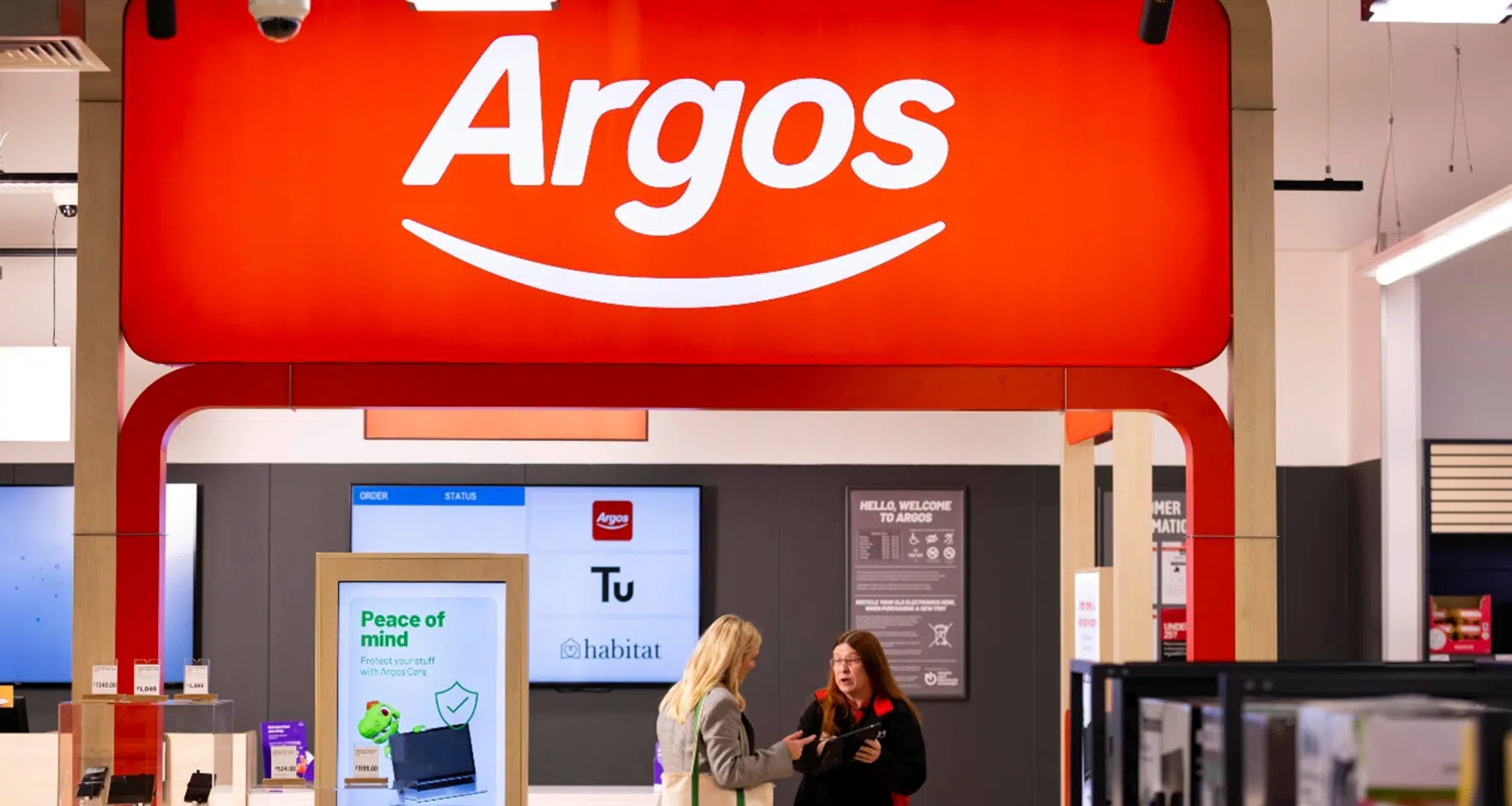
Argos’ Fast Track delivery and Click & Collect is available across more than 90 per cent of UK postcodes, seven days a week,

The sale should not be interpreted as an immediate end to the relationship. Instead, it signals a change in the strategic rationale underpinning it.

The deal releases Sainsbury’s from the responsibility of transforming a general merchandise business in a market characterised by intense online competition, price pressure and subdued discretionary spending.

Its latest annual results showed Argos sales of £4.125bn, up 0.7 per cent, but the increase in sales volumes was largely offset by lower average selling prices. Underlying operating profit was £9m, while the group reported a pre-tax loss of £223.2m.

While dedicated ownership could mean a clearer strategic focus and investment decisions for Argos, rather than those of a supermarket group prioritising food.

The challenge is that independence also removes some of the benefits of operating within a larger organisation. Argos will need to preserve the value of its supermarket presence and loyalty partnerships while developing its own proposition, improving profitability and competing for customers against established online giants.

A marketplace is one way to address those pressures without relying solely on opening stores or investing in stock.

Can Argos replicate Debenhams’ marketplace success?

Argos is not the first UK retailer to turn to a marketplace to expand its range while reducing the risks associated with holding stock. Debenhams Group has made the model central to its turnaround, offering a useful, although not directly comparable,  example of what Argos could achieve.

Debenhams’ parent company, formerly Boohoo Group, acquired the department store’s brand and online operations out of administration in 2021 for £55m, without taking on its physical store estate. It has since repositioned the brand as an online platform selling products from third-party retailers alongside its wider portfolio, which includes PrettyLittleThing, Boohoo and Karen Millen.

Its marketplace strategy is beginning to deliver results. In July, Debenhams Group reported that gross merchandise value (GMV) had returned to year-on-year growth, with improved sales margins and lower customer return rates.

Chief executive Dan Finley says: “Our platform model and diversified product assortment enables us to pivot quickly and capitalise on consumer demand.”

The group set its sights on becoming a multi-billion-pound GMV business capable of generating more than £100m in earnings before interest, tax, depreciation and amortisation (EBITDA). Its September interim results subsequently showed adjusted core profit rising 13.9 per cent to £24m for the six months to 31 August, compared with £21m a year earlier.

Third-party sellers supply and fulfil their own products, allowing the platform to broaden its assortment without committing the same level of capital to inventory. A wider range can attract new shoppers, improve the chances of customers finding what they want and create additional revenue opportunities.

Argos could view this as a way to compete on breadth with ecommerce giants such as Amazon without having to purchase, store and manage every product it lists.

Biggart states: “With over one billion visits to our website each year and a brand built on value, trust and quality, we see a real opportunity to offer an even wider range of products that complements our core ranges and the highly valued suppliers we work with today.”

There are important differences between Debenhams and Argos, however.

Debenhams has built its strategy around a portfolio of online fashion brands and a marketplace-led operation. Argos, meanwhile, retains a substantial core retail business, established supplier relationships and a physical fulfilment network. Its marketplace is designed to complement rather than replace its existing ranges.

Therefore, Argos cannot simply increase its product count and assume that customers will follow. The marketplace must reinforce the reasons people already shop with the retailer. It needs to focus on recognisable brands, competitive prices, convenient delivery and providing customers with confidence that purchases will arrive as expected.

Can trust become Argos’ competitive advantage?

Argos is betting that it can differentiate its marketplace through curation rather than unlimited choice.

Its Trusted Sellers model is not intended to be an entirely open platform. The retailer says partners are vetted and products reviewed to maintain standards around quality and safety. Customers can also continue to earn Nectar points on marketplace purchases, preserving a link with the wider Sainsbury’s ecosystem.

That could prove valuable in categories such as beauty, where shoppers may be wary of counterfeit products, questionable sellers or unclear supply chains. Adding established brands can also help Argos move into new shopping missions without losing its identity as a trusted general merchandise retailer.

However, curation creates its own operational demands. Argos will need to ensure sellers maintain accurate product information, stock availability and delivery promises, while providing a consistent approach to returns, complaints and after-sales support. When customers buy through a familiar retailer, they are likely to hold that retailer responsible if something goes wrong, even when a third party fulfils the order.

Argos stressed the marketplace is not about changing what it is famous for. Core categories will continue to grow, supported by strong supplier partnerships and “established market leadership”

Argos already has a well-established same-day and next-day proposition, alongside Click & Collect and a network of physical locations. The company has previously highlighted the potential to extend these capabilities to marketplace products, although its current marketplace expansion does not mean all third-party goods will automatically be available through the same fulfilment options.

The retailer must also make sure its broader range does not undermine its core offer. An abundance of similar products, inconsistent pricing or poorly differentiated listings could make the website harder to navigate rather than easier to shop.

A new chapter, not a silver bullet

Argos enters this transition with some advantages. Sainsbury’s reported more than one billion visits to the Argos website annually when outlining the marketplace strategy, while the brand remains familiar to millions of UK shoppers. Its existing digital infrastructure, supplier relationships and collection network give it a foundation that a new ecommerce business would struggle to replicate.

There are encouraging signs elsewhere in the business, too. Sainsbury’s has been investing in the Argos app, faster fulfilment, automation and a more focused own-brand portfolio. The marketplace is one element of that wider transformation, alongside Argos Pay and the Argos Plus delivery pass.

Yet the retailer’s latest performance underlines the scale of the task. Sales growth alone has not translated into a meaningful improvement in underlying profitability, with pricing pressure and the cost of attracting online traffic weighing on performance. A marketplace could help diversify revenue and reduce stock exposure, but it will not automatically resolve those structural challenges.

Argos also faces competition from retailers with established marketplace ecosystems, extensive product ranges and sophisticated fulfilment operations. To win, it needs to give shoppers a compelling reason to choose its platform rather than search elsewhere.

Debenhams demonstrates that a marketplace-led model can support a turnaround, but it does not guarantee one. Argos has a different starting point, a physical network to maintain and a brand promise built around convenience and reliability.

Ultimately, the opportunity is not simply to become a bigger online shop. It is to make Argos relevant to more shopping occasions while protecting the qualities that have sustained it for more than half a century.

If Trusted Sellers can expand choice, attract incremental customers and generate profitable growth without diluting service standards, the marketplace could become a valuable engine for Argos’ next phase. It is unlikely to save the retailer on its own. But under dedicated ownership, it could give Argos something it has long needed: a clearer route to growth beyond the limitations of its traditional store estate.

Click here to sign up to Retail Gazette‘s free daily email newsletter

EcommerceFeature Articles

Leave a Reply

Your email address will not be published. Required fields are marked *

Fill out this field
Fill out this field
Please enter a valid email address.

Could a marketplace model save Argos?

Argos is preparing to redefine its place in UK retail as it expands its marketplace offering and moves towards greater independence from Sainsbury’s.

The strategy could give the catalogue-born retailer a route back to growth, but success will depend on whether it can turn its familiar brand, digital reach and remaining store network into a compelling proposition in an increasingly crowded online market.

Earlier this moth, Argos confirmed plans to expand its Trusted Sellers marketplace to more than 130,000 products by the end of 2026, following a trial with 40 partners in July.

The platform already offers more than 70,000 products, with its range extending beyond furniture, homewares and toys into health and beauty, gifting and electricals. Brands available include Clarins, Dermalogica and Medicube.

“Introducing a marketplace within the next year marks an exciting next step in Argos’ multi‑year transformation,” explains Graham Biggart, managing director of Argos.

“It reflects what we know customers want – more choice, more convenience and more reasons to shop with confidence.”

The expansion comes as Argos prepares for a change of ownership that will end a decade under Sainsbury’s control. The question is whether a marketplace can help the retailer rediscover its relevance, and build a more sustainable business model, as it enters its next chapter.

From catalogue pioneer to digital retailer

Argos has reinvented itself several times during its 53-year history. Founded by Richard Tompkins, the retailer opened its first store on London’s Old Street in July 1973, bringing together the convenience of browsing a catalogue at home with the ability to collect purchases from a local outlet.

At its peak, Argos operated more than 800 stores, while its twice-yearly catalogue became a familiar feature of households across the country. For generations, shoppers used its distinctive blue pens to mark the toys, electronics and homewares they wanted to buy.

But the model that made Argos successful also presented a challenge as shopping habits shifted online.

The retailer stopped printing its catalogue in 2020 after 47 years, by which point the number of catalogues produced annually had fallen from 10 million to three million. The move marked the end of a defining part of its identity, but also acknowledged that its digital operation had become the primary way customers browsed and purchased products.

In July, it launched ‘Your Catalogue’, a new mobile app feature designed to recreate the discovery-led experience of its former print catalogue for digital shoppers.

Argos’ app offers customers personalised product recommendations, curated trend edits, category lookbooks and new-arrival selections

Sainsbury’s acquired Argos parent Home Retail Group in 2016 for approximately £1.4bn, betting that combining general merchandise with grocery shopping would create a stronger multichannel proposition. Argos concessions inside supermarkets offered customers the opportunity to collect purchases alongside their weekly shop, while the supermarket group could benefit from additional footfall.

This enabled Sainsbury’s to share property, distribution and customer loyalty infrastructure, while Argos gained access to a large existing customer base.

However, the partnership also accelerated a retreat from the traditional high street. Sainsbury’s progressively closed standalone Argos branches and shifted towards concessions inside its supermarkets and other collection points.

By 2023, Argos had fewer than 250 standalone stores, down from more than 700 when Sainsbury’s bought the business. The retailer maintained that its wider network of concessions and collection points gave it more than 1,100 physical touchpoints.

That network remains an important competitive advantage. Yet the reduction in standalone stores has also left Argos with a different physical identity: less of a traditional high-street destination and more of an online retailer supported by a network of collection locations.

Why is Sainsbury’s stepping away?

The planned separation reflects a shift in priorities at Sainsbury’s, which has increasingly focused on its core grocery business.

In July 2026, the supermarket group agreed to sell Argos to Swift Partners for £120m, a fraction of the approximately £1.4bn it paid a decade earlier. The consortium is led by retail executives Richard Pennycook, Trevor Strain and Matt Truman, who have experience across UK retail, operations and investment.

The deal is expected to complete in February 2027, with full separation anticipated by February 2029. Until then, Argos and Sainsbury’s will continue to operate as they do today. Commercial agreements will preserve selected links, including Argos concessions and collection points in Sainsbury’s stores, the Nectar loyalty scheme and access to Nectar360 retail media services.

Argos’ Fast Track delivery and Click & Collect is available across more than 90 per cent of UK postcodes, seven days a week,

The sale should not be interpreted as an immediate end to the relationship. Instead, it signals a change in the strategic rationale underpinning it.

The deal releases Sainsbury’s from the responsibility of transforming a general merchandise business in a market characterised by intense online competition, price pressure and subdued discretionary spending.

Its latest annual results showed Argos sales of £4.125bn, up 0.7 per cent, but the increase in sales volumes was largely offset by lower average selling prices. Underlying operating profit was £9m, while the group reported a pre-tax loss of £223.2m.

While dedicated ownership could mean a clearer strategic focus and investment decisions for Argos, rather than those of a supermarket group prioritising food.

The challenge is that independence also removes some of the benefits of operating within a larger organisation. Argos will need to preserve the value of its supermarket presence and loyalty partnerships while developing its own proposition, improving profitability and competing for customers against established online giants.

A marketplace is one way to address those pressures without relying solely on opening stores or investing in stock.

Can Argos replicate Debenhams’ marketplace success?

Argos is not the first UK retailer to turn to a marketplace to expand its range while reducing the risks associated with holding stock. Debenhams Group has made the model central to its turnaround, offering a useful, although not directly comparable,  example of what Argos could achieve.

Debenhams’ parent company, formerly Boohoo Group, acquired the department store’s brand and online operations out of administration in 2021 for £55m, without taking on its physical store estate. It has since repositioned the brand as an online platform selling products from third-party retailers alongside its wider portfolio, which includes PrettyLittleThing, Boohoo and Karen Millen.

Its marketplace strategy is beginning to deliver results. In July, Debenhams Group reported that gross merchandise value (GMV) had returned to year-on-year growth, with improved sales margins and lower customer return rates.

Chief executive Dan Finley says: “Our platform model and diversified product assortment enables us to pivot quickly and capitalise on consumer demand.”

The group set its sights on becoming a multi-billion-pound GMV business capable of generating more than £100m in earnings before interest, tax, depreciation and amortisation (EBITDA). Its September interim results subsequently showed adjusted core profit rising 13.9 per cent to £24m for the six months to 31 August, compared with £21m a year earlier.

Third-party sellers supply and fulfil their own products, allowing the platform to broaden its assortment without committing the same level of capital to inventory. A wider range can attract new shoppers, improve the chances of customers finding what they want and create additional revenue opportunities.

Argos could view this as a way to compete on breadth with ecommerce giants such as Amazon without having to purchase, store and manage every product it lists.

Biggart states: “With over one billion visits to our website each year and a brand built on value, trust and quality, we see a real opportunity to offer an even wider range of products that complements our core ranges and the highly valued suppliers we work with today.”

There are important differences between Debenhams and Argos, however.

Debenhams has built its strategy around a portfolio of online fashion brands and a marketplace-led operation. Argos, meanwhile, retains a substantial core retail business, established supplier relationships and a physical fulfilment network. Its marketplace is designed to complement rather than replace its existing ranges.

Therefore, Argos cannot simply increase its product count and assume that customers will follow. The marketplace must reinforce the reasons people already shop with the retailer. It needs to focus on recognisable brands, competitive prices, convenient delivery and providing customers with confidence that purchases will arrive as expected.

Can trust become Argos’ competitive advantage?

Argos is betting that it can differentiate its marketplace through curation rather than unlimited choice.

Its Trusted Sellers model is not intended to be an entirely open platform. The retailer says partners are vetted and products reviewed to maintain standards around quality and safety. Customers can also continue to earn Nectar points on marketplace purchases, preserving a link with the wider Sainsbury’s ecosystem.

That could prove valuable in categories such as beauty, where shoppers may be wary of counterfeit products, questionable sellers or unclear supply chains. Adding established brands can also help Argos move into new shopping missions without losing its identity as a trusted general merchandise retailer.

However, curation creates its own operational demands. Argos will need to ensure sellers maintain accurate product information, stock availability and delivery promises, while providing a consistent approach to returns, complaints and after-sales support. When customers buy through a familiar retailer, they are likely to hold that retailer responsible if something goes wrong, even when a third party fulfils the order.

Argos stressed the marketplace is not about changing what it is famous for. Core categories will continue to grow, supported by strong supplier partnerships and “established market leadership”

Argos already has a well-established same-day and next-day proposition, alongside Click & Collect and a network of physical locations. The company has previously highlighted the potential to extend these capabilities to marketplace products, although its current marketplace expansion does not mean all third-party goods will automatically be available through the same fulfilment options.

The retailer must also make sure its broader range does not undermine its core offer. An abundance of similar products, inconsistent pricing or poorly differentiated listings could make the website harder to navigate rather than easier to shop.

A new chapter, not a silver bullet

Argos enters this transition with some advantages. Sainsbury’s reported more than one billion visits to the Argos website annually when outlining the marketplace strategy, while the brand remains familiar to millions of UK shoppers. Its existing digital infrastructure, supplier relationships and collection network give it a foundation that a new ecommerce business would struggle to replicate.

There are encouraging signs elsewhere in the business, too. Sainsbury’s has been investing in the Argos app, faster fulfilment, automation and a more focused own-brand portfolio. The marketplace is one element of that wider transformation, alongside Argos Pay and the Argos Plus delivery pass.

Yet the retailer’s latest performance underlines the scale of the task. Sales growth alone has not translated into a meaningful improvement in underlying profitability, with pricing pressure and the cost of attracting online traffic weighing on performance. A marketplace could help diversify revenue and reduce stock exposure, but it will not automatically resolve those structural challenges.

Argos also faces competition from retailers with established marketplace ecosystems, extensive product ranges and sophisticated fulfilment operations. To win, it needs to give shoppers a compelling reason to choose its platform rather than search elsewhere.

Debenhams demonstrates that a marketplace-led model can support a turnaround, but it does not guarantee one. Argos has a different starting point, a physical network to maintain and a brand promise built around convenience and reliability.

Ultimately, the opportunity is not simply to become a bigger online shop. It is to make Argos relevant to more shopping occasions while protecting the qualities that have sustained it for more than half a century.

If Trusted Sellers can expand choice, attract incremental customers and generate profitable growth without diluting service standards, the marketplace could become a valuable engine for Argos’ next phase. It is unlikely to save the retailer on its own. But under dedicated ownership, it could give Argos something it has long needed: a clearer route to growth beyond the limitations of its traditional store estate.

Click here to sign up to Retail Gazette‘s free daily email newsletter

Social


SUBSCRIBE TO OUR DAILY NEWSLETTER

  • This field is for validation purposes and should be left unchanged.
EcommerceFeature Articles

Leave a Reply

Your email address will not be published. Required fields are marked *

Fill out this field
Fill out this field
Please enter a valid email address.

RELATED STORIES

Latest Feature


Menu


Please enter the verification code sent to your email: