

Swiss performance brand On has opened a second automated footwear factory near Busan, South Korea, as it accelerates efforts to nearshore production, reduce tariff exposure and compress time to market.
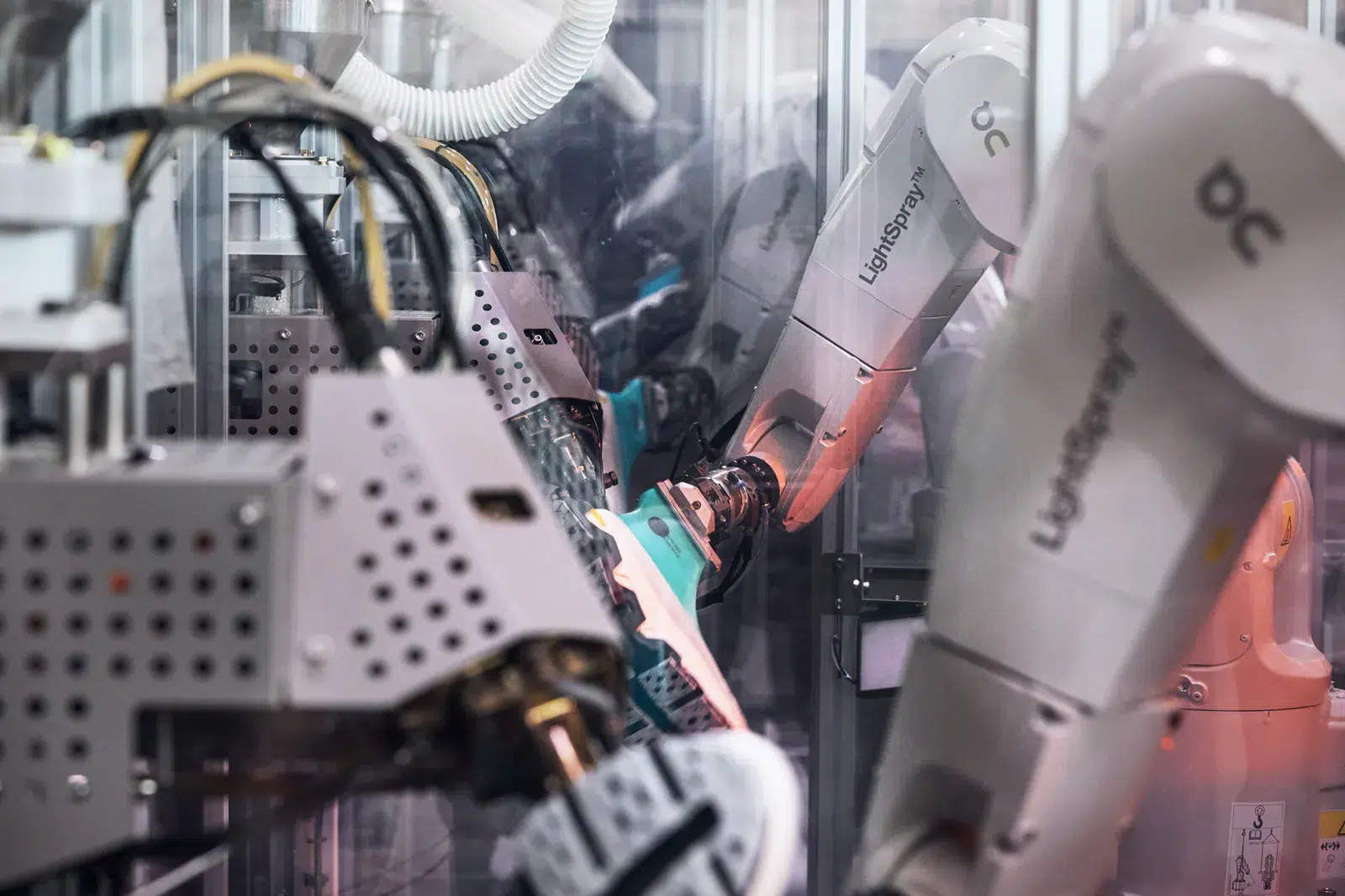
The new facility, which houses 32 robots, follows the launch of On’s first robotic production site in Zurich in July 2025, which operates with four robots.
Combined, the expansion is expected to increase On’s global capacity 30-fold in 2026, as the retailer looks to rebalance a supply chain still heavily weighted towards Asia.
On currently sources 90 per cent of its footwear from third-party manufacturers in Vietnam and 10 per cent from Indonesia, according to its latest annual report. Like many sportswear brands, it has historically relied on South-East Asian production hubs before shipping finished goods to Europe and the US.
However, tariff hikes imposed by the US, ongoing geopolitical volatility and continued supply chain disruption have intensified industry discussions around nearshoring and regionalised manufacturing.
Co-founder Caspar Coppetti said automation allows the brand to produce footwear closer to key consumer markets, while improving speed, efficiency and environmental performance.
“The speed to market, the sustainability of it and the fact that we’re running out of places with cheap labour are all speaking for automation and going closer to where consumers are,” he said.
The Busan facility is positioned not only as a production site but as a blueprint for replication across continents. On confirmed it plans to initiate production in the Americas and scale automated manufacturing across Europe in the coming years, a move that would help mitigate tariff exposure in the US market.
Recent legal rulings around US tariffs have created further uncertainty for retailers importing from Vietnam and China, adding urgency to supply chain diversification strategies.
Scott Maguire, On’s chief innovation officer, said the technology allows identical programming across global sites.
“We can precisely programme each robot, whether in Zurich or Busan, to execute choreographed movements to craft each shoe’s unique look and feel,” he said.
South Korea was selected due to its advanced robotics infrastructure and strong automation ecosystem. The Busan factory is capable of producing around 1,000 pairs of On’s shoes per day.
Supply chain resilience meets competitive pressure
The expansion also comes amid intensifying competition with industry heavyweights such as Nike and Adidas in the race to develop the fastest marathon shoe.
On-sponsored athlete Hellen Obiri wore the ‘LightSpray’ model when she won the New York Marathon in November, reinforcing the brand’s performance credentials.
Yet beyond product innovation, the real strategic play lies in operational transformation.
By collapsing complex, multi-country production into automated, near-market facilities, On is testing a radically different footwear supply chain model. One built around robotics, programmable manufacturing and regional flexibility rather than low-cost labour arbitrage.
If successful, it could offer a glimpse of how premium performance brands rebalance global sourcing in an era defined by tariff risk, labour constraints and sustainability scrutiny.
Click here to sign up to Retail Gazette‘s free daily email newsletter