

AI agents, weight-loss drugs and the recommerce boom: Shoptalk’s predictions for the next decade of European retail

EcommerceNewsResearchSupply Chain

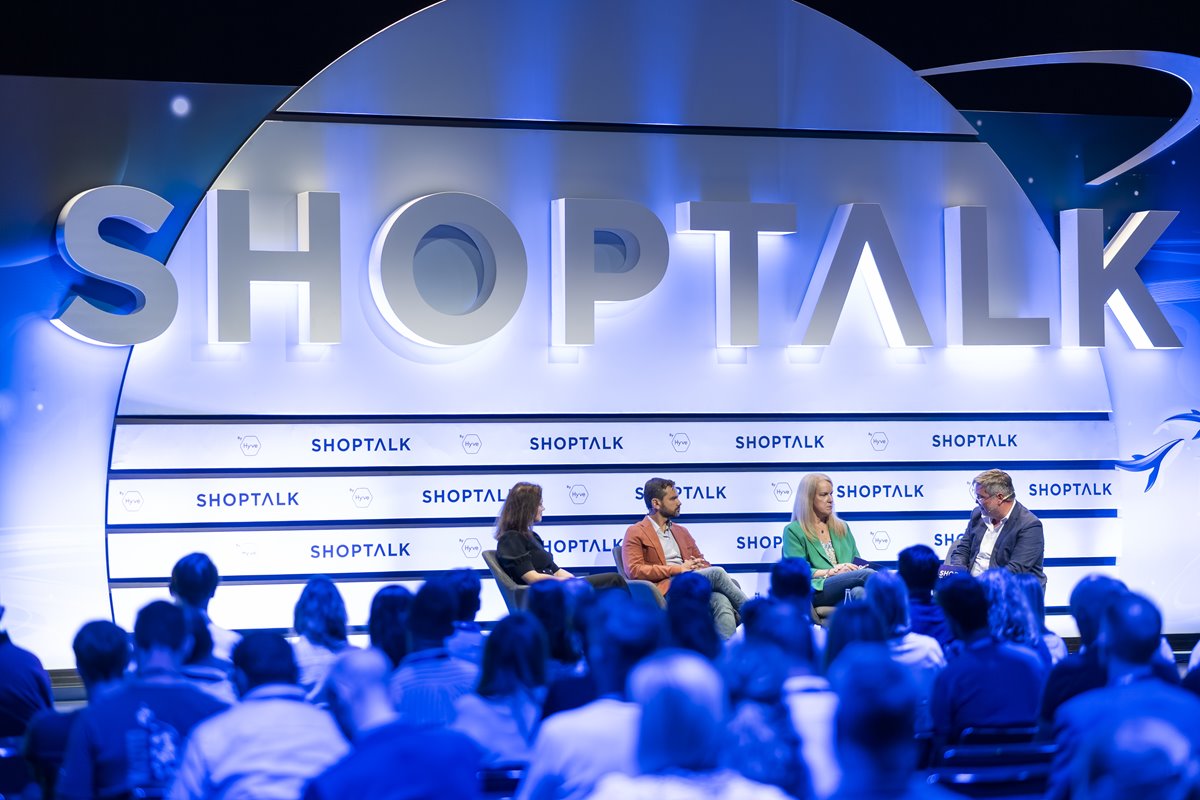
Shoptalk Europe today unveiled five predictions for the next decade of European retail at its 2026 Barcelona event, forecasting that AI shopping agents, weight-loss drugs, the recommerce boom, personalisation of physical stores and a transformation in supply chain planning will fundamentally reshape the industry by 2036.

Adam Plom, VP of content at Shoptalk Europe said, “European retail is in a state of perpetual disruption, and it can be difficult to separate signals from the noise.

“From agentic commerce to the resale economy, changing consumer health patterns to the creation of smarter stores and a supply chain under pressure from an increasingly unpredictable world, there are clear trends emerging that will define the next decade of retail. The retailers and brands that respond to these shifting consumer behaviours and emerging technological capabilities now, will be the ones winning in 2036.”

Agentic commerce will drive ecommerce growth

The headline prediction from Shoptalk Europe is that agentic commerce, covering both AI-assisted shopping through answer engines like Gemini, and fully delegated buying via autonomous agents, will drive ecommerce to a greater share of total retail.

Agentic commerce adoption is accelerating. Research from Merkle1, developed exclusively for Shoptalk, found 37 per cent of US consumers were using AI tools sometimes or regularly for shopping in November 2025; by February 2026 that had risen to 47 per cent.

More than a third of industry professionals surveyed by Shoptalk and Placer AI expect agentic commerce to create entirely new buying occasions, leading shoppers to spend more overall.

Research from Merkle2 finds more than half of shoppers are interested in a service that automatically buys and replenishes household supplies.

When mapped across low-complexity purchases, its research finds autonomous agent-to-agent commerce could account for 10-25 per cent of global B2C commerce in 2030 – a potential one trillion euro disruption.

ChatGPT alone had 800 million active weekly users at the end of 2025, and US commerce platforms built on protocols such as OpenAI’s ACP and Google’s UCP are scaling fast. In a sign of how quickly the landscape is shifting, OpenAI has already moved checkout from ChatGPT itself and into retailer-owned apps.

Plom said: “The infrastructure for agentic commerce is being built right now in the US, and we believe Europe is six to twelve months behind. With such a positive outlook, we expect to see investment accelerate to create solutions that will convert the attention consumers are already giving to answer engines into commerce.

“With Merkle predicting a one trillion euro disruption in autonomous agent-to-agent commerce, when it arrives at scale here, it will move fast – and the risk of doing nothing is far greater than the risk of getting it wrong.”

GLP-1 drugs will transform shopping behaviour

Roughly  one per cent of the global population currently takes GLP-1 appetite suppressants, but Morgan Stanley forecasts that could reach 10 per cent over the next decade, driven by oral delivery options and falling prices.

People on GLP-1s eat eight per cent less food on average and McKinsey identifies crisps, savoury snacks and sweet bakeries as the hardest-hit categories.

Plom said: “Forty-six percent of GLP-1 users have already changed where they do their main grocery shop – that’s happening right now. We predict extensive merchandising changes ahead, as retailers and consumer goods companies lean into high protein, smaller portions, on-the-go convenience and digestive health.

“The impact won’t stop at food – weight loss drives wardrobe refreshes too, creating a real tailwind for apparel brands. The brands that get ahead of this shift will be well placed; those that ignore it will feel it in the numbers.”

Recommerce will reach tipping point

McKinsey and the Business of Fashion forecast the global second-hand fashion and luxury market to grow from €168bn (2023) to €270bn (2027).

Plom said, “Nearly 90 per cent of resale spend is currently going to peer-to-peer marketplaces. That’s revenue, and customer data, that could belong to the original brand. We believe the retailers who move first will build a loyalty and lifetime value advantage and will scale their propositions to make their investments profitable.”

Physical stores that know you personally

Stores will remain the dominant retail channel in Europe, but Shoptalk expects more retailers to incentivise, or require, shoppers to identify themselves at entry.

Kantar (Q4 2025) found nearly half of shoppers are annoyed by locked products, with a third now avoiding retailers where this is common. In Costco’s Annual Report, it shared that by strictly controlling the entrances and exits and using a membership format, it believes its inventory losses are “well below those of typical retail operations”.

Plom said, “Three forces are pushing this in the same direction at once – in-store retail media’s need for attribution data, more personalised loyalty programmes that give shoppers a real reason to share their identity, and growing frustration with anti-theft measures.”

Operations and supply chain: automation, agility and the end of static forecasting

According to ECDB forecast, European e-commerce revenues are expected to grow at a compounded annual growth rate (CAGR) of 7.7 per cent to reach €951 billion by 2029. While macro stats blur nuance at the individual category level, the momentum is clear and Shoptalk believes its earlier prediction on agentic commerce will only drive automated e-commerce fulfilment faster.

At the same time, Black Swan events are hitting retail with greater frequency, pushing many companies from lean just-in-time supply chains towards costlier just-in-case models with stock buffers.

Plom said, “Some retailers have pivoted to lower CapEx, store-based fulfilment and that’s understandable at certain volumes. But the rate of ecommerce growth will swing the pendulum back. We predict there’s a tipping point coming in order volume and delivery density that makes automation crucial for long-term profitability.”

He added, “Automation alone isn’t enough. The companies that win will pair it with demand sensing – continuously updated forecasts using real-time sales, weather and social data so they can react in hours instead of days or weeks. Unilever has already shown what good looks like, reducing forecast errors and cutting safety stock in the process.”

Click here to sign up to Retail Gazette‘s free daily email newsletter

EcommerceNewsResearchSupply Chain

Leave a Reply

Your email address will not be published. Required fields are marked *

Fill out this field
Fill out this field
Please enter a valid email address.

AI agents, weight-loss drugs and the recommerce boom: Shoptalk’s predictions for the next decade of European retail

Shoptalk Europe today unveiled five predictions for the next decade of European retail at its 2026 Barcelona event, forecasting that AI shopping agents, weight-loss drugs, the recommerce boom, personalisation of physical stores and a transformation in supply chain planning will fundamentally reshape the industry by 2036.

Adam Plom, VP of content at Shoptalk Europe said, “European retail is in a state of perpetual disruption, and it can be difficult to separate signals from the noise.

“From agentic commerce to the resale economy, changing consumer health patterns to the creation of smarter stores and a supply chain under pressure from an increasingly unpredictable world, there are clear trends emerging that will define the next decade of retail. The retailers and brands that respond to these shifting consumer behaviours and emerging technological capabilities now, will be the ones winning in 2036.”

Agentic commerce will drive ecommerce growth

The headline prediction from Shoptalk Europe is that agentic commerce, covering both AI-assisted shopping through answer engines like Gemini, and fully delegated buying via autonomous agents, will drive ecommerce to a greater share of total retail.

Agentic commerce adoption is accelerating. Research from Merkle1, developed exclusively for Shoptalk, found 37 per cent of US consumers were using AI tools sometimes or regularly for shopping in November 2025; by February 2026 that had risen to 47 per cent.

More than a third of industry professionals surveyed by Shoptalk and Placer AI expect agentic commerce to create entirely new buying occasions, leading shoppers to spend more overall.

Research from Merkle2 finds more than half of shoppers are interested in a service that automatically buys and replenishes household supplies.

When mapped across low-complexity purchases, its research finds autonomous agent-to-agent commerce could account for 10-25 per cent of global B2C commerce in 2030 – a potential one trillion euro disruption.

ChatGPT alone had 800 million active weekly users at the end of 2025, and US commerce platforms built on protocols such as OpenAI’s ACP and Google’s UCP are scaling fast. In a sign of how quickly the landscape is shifting, OpenAI has already moved checkout from ChatGPT itself and into retailer-owned apps.

Plom said: “The infrastructure for agentic commerce is being built right now in the US, and we believe Europe is six to twelve months behind. With such a positive outlook, we expect to see investment accelerate to create solutions that will convert the attention consumers are already giving to answer engines into commerce.

“With Merkle predicting a one trillion euro disruption in autonomous agent-to-agent commerce, when it arrives at scale here, it will move fast – and the risk of doing nothing is far greater than the risk of getting it wrong.”

GLP-1 drugs will transform shopping behaviour

Roughly  one per cent of the global population currently takes GLP-1 appetite suppressants, but Morgan Stanley forecasts that could reach 10 per cent over the next decade, driven by oral delivery options and falling prices.

People on GLP-1s eat eight per cent less food on average and McKinsey identifies crisps, savoury snacks and sweet bakeries as the hardest-hit categories.

Plom said: “Forty-six percent of GLP-1 users have already changed where they do their main grocery shop – that’s happening right now. We predict extensive merchandising changes ahead, as retailers and consumer goods companies lean into high protein, smaller portions, on-the-go convenience and digestive health.

“The impact won’t stop at food – weight loss drives wardrobe refreshes too, creating a real tailwind for apparel brands. The brands that get ahead of this shift will be well placed; those that ignore it will feel it in the numbers.”

Recommerce will reach tipping point

McKinsey and the Business of Fashion forecast the global second-hand fashion and luxury market to grow from €168bn (2023) to €270bn (2027).

Plom said, “Nearly 90 per cent of resale spend is currently going to peer-to-peer marketplaces. That’s revenue, and customer data, that could belong to the original brand. We believe the retailers who move first will build a loyalty and lifetime value advantage and will scale their propositions to make their investments profitable.”

Physical stores that know you personally

Stores will remain the dominant retail channel in Europe, but Shoptalk expects more retailers to incentivise, or require, shoppers to identify themselves at entry.

Kantar (Q4 2025) found nearly half of shoppers are annoyed by locked products, with a third now avoiding retailers where this is common. In Costco’s Annual Report, it shared that by strictly controlling the entrances and exits and using a membership format, it believes its inventory losses are “well below those of typical retail operations”.

Plom said, “Three forces are pushing this in the same direction at once – in-store retail media’s need for attribution data, more personalised loyalty programmes that give shoppers a real reason to share their identity, and growing frustration with anti-theft measures.”

Operations and supply chain: automation, agility and the end of static forecasting

According to ECDB forecast, European e-commerce revenues are expected to grow at a compounded annual growth rate (CAGR) of 7.7 per cent to reach €951 billion by 2029. While macro stats blur nuance at the individual category level, the momentum is clear and Shoptalk believes its earlier prediction on agentic commerce will only drive automated e-commerce fulfilment faster.

At the same time, Black Swan events are hitting retail with greater frequency, pushing many companies from lean just-in-time supply chains towards costlier just-in-case models with stock buffers.

Plom said, “Some retailers have pivoted to lower CapEx, store-based fulfilment and that’s understandable at certain volumes. But the rate of ecommerce growth will swing the pendulum back. We predict there’s a tipping point coming in order volume and delivery density that makes automation crucial for long-term profitability.”

He added, “Automation alone isn’t enough. The companies that win will pair it with demand sensing – continuously updated forecasts using real-time sales, weather and social data so they can react in hours instead of days or weeks. Unilever has already shown what good looks like, reducing forecast errors and cutting safety stock in the process.”

Click here to sign up to Retail Gazette‘s free daily email newsletter

Social


SUBSCRIBE TO OUR DAILY NEWSLETTER

  • This field is for validation purposes and should be left unchanged.
EcommerceNewsResearchSupply Chain

Leave a Reply

Your email address will not be published. Required fields are marked *

Fill out this field
Fill out this field
Please enter a valid email address.

RELATED STORIES

Latest Feature

Dynamic pricing isn’t the problem, says former Asda chief

The backlash against FIFA's dynamic pricing model for World Cup tickets has reignited concerns about retailers using technology to alter prices in real time.

Retail Gazette caught up with Hill to discuss the future of supermarket pricing, why personalised offers, rather than surge pricing, are likely to shape the next chapter of grocery retail, and why misconceptions about electronic shelf-edge labels risk obscuring the real debate around trust.

Read More


Menu

Get Inside Matalan

A supply chain case study delivered to your inbox in three emails. The 3 elements Matalan changed to impact its bottom line..

Matalan Supply Chain Programme Form

  • This field is for validation purposes and should be left unchanged.


Close popup

Please enter the verification code sent to your email: