How to stop profits leaking across your multi-sites with simple, scalable automation

NewsSponsoredTechnology

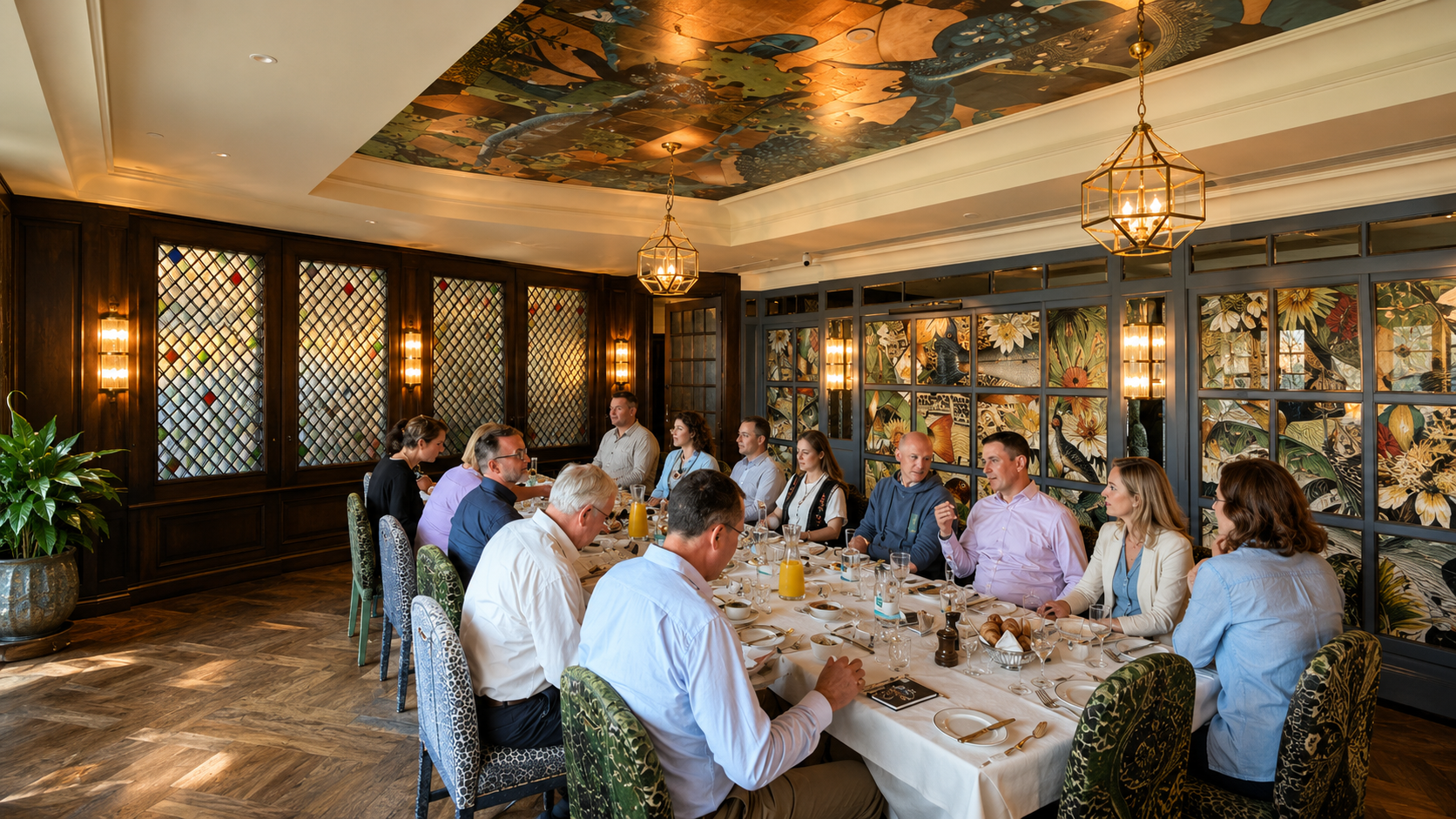
Retailers and logistics operators have long spoken about sustainability, but the conversation is becoming more immediate, commercial and operational. That was the central message from a breakfast roundtable hosted by Retail Gazette and Schneider Electric.

Senior figures from across grocery, fashion, hospitality, logistics and facilities gathered to discuss how energy efficiency, automation and better data can help stem rising costs and improve resilience across portfolios of stores, restaurants, hospitality venues and other small-footprint sites.

The debate opened against a timely backdrop: heatwaves, refrigeration failures and the very real operational pain of stores being forced to react when essential systems break down. For supermarkets and other food retailers, a faulty fridge is not just an energy issue; it can quickly become a stock-loss, customer-experience and business-continuity problem. The image of head office teams being called into stores to move frozen stock out of broken freezers during extreme weather captured the urgency of the challenge.

Participants agreed that sustainability is firmly on the agenda, but the roundtable made clear that energy must be framed in a language businesses can act on. For many retailers, especially those operating hundreds  of relatively small sites, the biggest barrier is not a lack of ambition but the difficulty of deploying improvements at scale.

One delegate noted that energy and water can be among the largest operating costs after payroll in hospitality settings, while grocery and retail estates face similar pressure from lighting, heating, cooling and refrigeration.

There was optimism in the room. Retailers are taking energy efficiency seriously, and Schneider Electric’s event highlighted the opportunity for automation, AI and connected systems to uncover hidden inefficiencies across distributed estates.

The potential prize is substantial: savings in the region of 15% to 20% were discussed, with payback periods that can be short enough to make the commercial case compelling. Yet the conversation repeatedly returned to the same question: if the benefits are clear, why is progress still so difficult?

Responsibility and real estate
Around the table, delegates described energy transformation as a maze. Is it the responsibility of procurement, property, operations, sustainability teams, finance, the C-suite, or third-party experts? In logistics, where warehouses may be operated by one business on behalf of another, accountability can become even more blurred. The issue is both sustainability and operational excellence: reducing consumption cuts cost and reduces environmental impact at the same time.

Another barrier is the condition of the estate itself. Several retailers are trying to improve efficiency in buildings that are decades old, and in some cases more than a century old. Many locations have limited onsite facilities expertise, making remote visibility and automation increasingly important. Additionally inflation has sharpened the focus on sales and immediate trading performance rather than longer-term infrastructure investment. One participant summed up the challenge bluntly: there is often limited operational appetite when store teams are already consumed by day-to-day pressures.

That is why behaviour and communication matter. Delegates were sceptical that store managers could simply be incentivised to reduce consumption when their attention is rightly focused on customers, colleagues and trading performance. Instead, energy strategies need to be translated into practical, familiar terms.

“Decarbonisation” may resonate at board level, but it does not always connect with colleagues on the shop floor. Simple actions, from keeping fridge doors closed to spotting heating left on overnight, require clear feedback loops and systems that make the right behaviour easy.

Data was another recurring theme. Some businesses still rely heavily on spreadsheets, while others only review energy information weekly or monthly. That makes it hard to spot issues quickly, let alone optimise performance consistently across hundreds of geographically dispersed stores. AI was seen as a useful tool, but only where the underlying infrastructure is strong enough to support it. As one delegate put it, there is no one-size-fits-all solution: hardware, software and analytics all have a role, but businesses first need to understand their baseline.

Trial and error
The most practical advice was to start small. Rather than waiting for a perfect transformation programme, retailers can use one store as an internal benchmark, identify quick wins and then replicate successful measures across the wider estate.

The marathon analogy used in the discussion was apt: before running the race, businesses need to know where their trainers are. That means understanding consumption, challenging assumptions and creating a business case that speaks to cost, resilience and carbon reduction.

Investment, however, remains the difficult leap. Logistics delegates pointed to electric fleet rollouts as an area where bold decisions are needed now, even as infrastructure constraints create hesitation. No one wants to be the first to make an expensive mistake, and many brands prefer to be fast followers, watching larger peers test, trial and occasionally stumble before committing themselves.

The roundtable’s strongest conclusion was that energy efficiency can no longer sit in a silo. It is a boardroom issue, an operational issue and a frontline issue.  The retailers and logistics businesses that make progress will be those that can connect leadership goals with actions at the individual site level, enabling hundreds or thousands of small locations to operate more efficiently and consistently. Several participants noted the growing importance of technologies that provide remote visibility, more consistent control and better operational insights across dispersed estates.

If the discussion revealed frustration, it also revealed readiness. The industry understands the cost drain, the environmental pressure and the operational risk. The solutions are increasingly available. The challenge now is to move from reactive fixes and isolated pilots to scaled, confident action across the store, warehouse and fleet networks that keep retail moving.

Click here to sign up to Retail Gazette‘s free daily email newsletter

NewsSponsoredTechnology

Leave a Reply

Your email address will not be published. Required fields are marked *

Fill out this field
Fill out this field
Please enter a valid email address.

How to stop profits leaking across your multi-sites with simple, scalable automation

Retailers and logistics operators have long spoken about sustainability, but the conversation is becoming more immediate, commercial and operational. That was the central message from a breakfast roundtable hosted by Retail Gazette and Schneider Electric.

Senior figures from across grocery, fashion, hospitality, logistics and facilities gathered to discuss how energy efficiency, automation and better data can help stem rising costs and improve resilience across portfolios of stores, restaurants, hospitality venues and other small-footprint sites.

The debate opened against a timely backdrop: heatwaves, refrigeration failures and the very real operational pain of stores being forced to react when essential systems break down. For supermarkets and other food retailers, a faulty fridge is not just an energy issue; it can quickly become a stock-loss, customer-experience and business-continuity problem. The image of head office teams being called into stores to move frozen stock out of broken freezers during extreme weather captured the urgency of the challenge.

Participants agreed that sustainability is firmly on the agenda, but the roundtable made clear that energy must be framed in a language businesses can act on. For many retailers, especially those operating hundreds  of relatively small sites, the biggest barrier is not a lack of ambition but the difficulty of deploying improvements at scale.

One delegate noted that energy and water can be among the largest operating costs after payroll in hospitality settings, while grocery and retail estates face similar pressure from lighting, heating, cooling and refrigeration.

There was optimism in the room. Retailers are taking energy efficiency seriously, and Schneider Electric’s event highlighted the opportunity for automation, AI and connected systems to uncover hidden inefficiencies across distributed estates.

The potential prize is substantial: savings in the region of 15% to 20% were discussed, with payback periods that can be short enough to make the commercial case compelling. Yet the conversation repeatedly returned to the same question: if the benefits are clear, why is progress still so difficult?

Responsibility and real estate
Around the table, delegates described energy transformation as a maze. Is it the responsibility of procurement, property, operations, sustainability teams, finance, the C-suite, or third-party experts? In logistics, where warehouses may be operated by one business on behalf of another, accountability can become even more blurred. The issue is both sustainability and operational excellence: reducing consumption cuts cost and reduces environmental impact at the same time.

Another barrier is the condition of the estate itself. Several retailers are trying to improve efficiency in buildings that are decades old, and in some cases more than a century old. Many locations have limited onsite facilities expertise, making remote visibility and automation increasingly important. Additionally inflation has sharpened the focus on sales and immediate trading performance rather than longer-term infrastructure investment. One participant summed up the challenge bluntly: there is often limited operational appetite when store teams are already consumed by day-to-day pressures.

That is why behaviour and communication matter. Delegates were sceptical that store managers could simply be incentivised to reduce consumption when their attention is rightly focused on customers, colleagues and trading performance. Instead, energy strategies need to be translated into practical, familiar terms.

“Decarbonisation” may resonate at board level, but it does not always connect with colleagues on the shop floor. Simple actions, from keeping fridge doors closed to spotting heating left on overnight, require clear feedback loops and systems that make the right behaviour easy.

Data was another recurring theme. Some businesses still rely heavily on spreadsheets, while others only review energy information weekly or monthly. That makes it hard to spot issues quickly, let alone optimise performance consistently across hundreds of geographically dispersed stores. AI was seen as a useful tool, but only where the underlying infrastructure is strong enough to support it. As one delegate put it, there is no one-size-fits-all solution: hardware, software and analytics all have a role, but businesses first need to understand their baseline.

Trial and error
The most practical advice was to start small. Rather than waiting for a perfect transformation programme, retailers can use one store as an internal benchmark, identify quick wins and then replicate successful measures across the wider estate.

The marathon analogy used in the discussion was apt: before running the race, businesses need to know where their trainers are. That means understanding consumption, challenging assumptions and creating a business case that speaks to cost, resilience and carbon reduction.

Investment, however, remains the difficult leap. Logistics delegates pointed to electric fleet rollouts as an area where bold decisions are needed now, even as infrastructure constraints create hesitation. No one wants to be the first to make an expensive mistake, and many brands prefer to be fast followers, watching larger peers test, trial and occasionally stumble before committing themselves.

The roundtable’s strongest conclusion was that energy efficiency can no longer sit in a silo. It is a boardroom issue, an operational issue and a frontline issue.  The retailers and logistics businesses that make progress will be those that can connect leadership goals with actions at the individual site level, enabling hundreds or thousands of small locations to operate more efficiently and consistently. Several participants noted the growing importance of technologies that provide remote visibility, more consistent control and better operational insights across dispersed estates.

If the discussion revealed frustration, it also revealed readiness. The industry understands the cost drain, the environmental pressure and the operational risk. The solutions are increasingly available. The challenge now is to move from reactive fixes and isolated pilots to scaled, confident action across the store, warehouse and fleet networks that keep retail moving.

Click here to sign up to Retail Gazette‘s free daily email newsletter

Social


SUBSCRIBE TO OUR DAILY NEWSLETTER

  • This field is for validation purposes and should be left unchanged.
NewsSponsoredTechnology

Leave a Reply

Your email address will not be published. Required fields are marked *

Fill out this field
Fill out this field
Please enter a valid email address.

RELATED STORIES

Latest Feature


Menu


Close popup

Please enter the verification code sent to your email: