

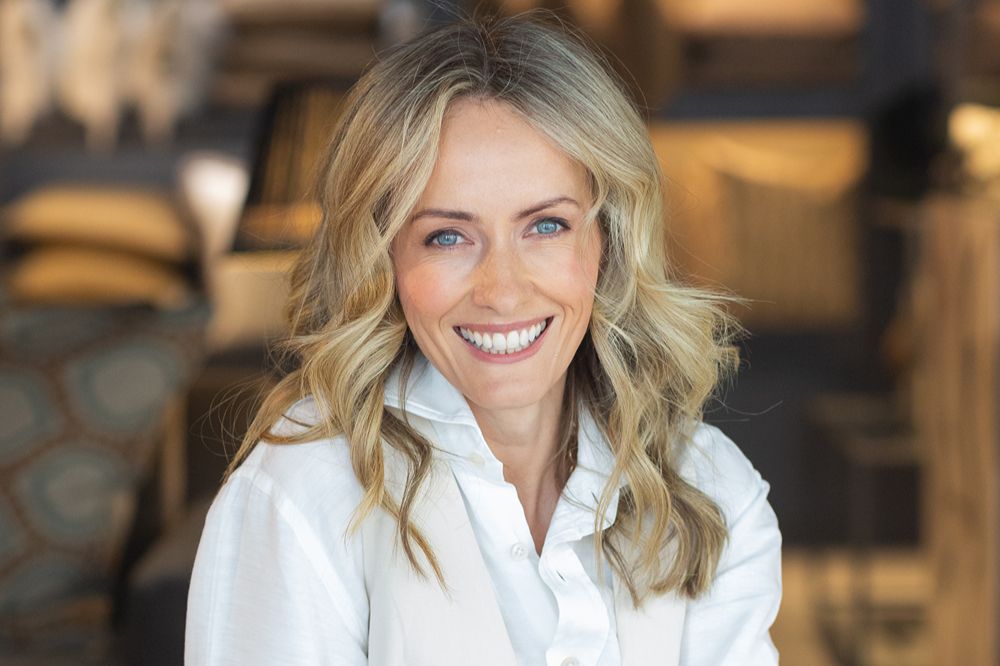
At the first RG Excellence Awards, OKA was presented with the title of Homeware Retailer of the Year. Aalish Yorke-Long, chief customer officer at the premium furniture and accessories retailer, explains how service, exclusivity and a more connected shopping journey are shaping its next phase.
OKA is working to protect its premium positioning in a subdued homeware market, resisting the temptation to chase volume through promotions. Instead, the retailer has focused on considered purchases, customer service and a clearer expression of what makes its products distinctive.
Chief customer officer Aalish Yorke-Long credits this approach for both growth and stronger customer relationships.
OKA has increased sales by 25 per cent alongside improved margins. Yorke-Long attributes that performance to a combination of digital investment, service, product expansion and new routes to market, rather than any single initiative.
The business has replatformed to Shopify, invested in its complimentary Interior Design Service and made-to-order Tailored by OKA range, and opened three new concessions with Fenwick and John Lewis. It has also moved into adjacent categories, launching its first wallpaper collection in April and made-to-order beds with Lewis & Wood.
“Crucially, customers noticed” says Yorke-Long. “Our Trustpilot score has risen from 3.1 to 4.5 across almost 7,000 reviews, and our NPS is now 67. Those are the numbers I’m proudest of, because they tell you the growth is sustainable.
“Underneath all of it is a very clear brand which we have worked hard over the last two years to distil at every touchpoint. Customers know what an OKA room looks like: relaxed, collected, well-made and built to last. Every decision we made this year was tested against that.”
Joining up the customer journey
That consistency is central to OKA’s approach to omnichannel retail: “Our customers don’t think in channels, so we’ve stopped organising ourselves around them.”
A purchase might begin on Instagram, move to the website, take in a showroom visit to test a sofa or view a fabric in daylight, and conclude with a call to the design team.
Shopify provided the foundation for that journey, bringing faster pages, better navigation and a cleaner checkout. It also enabled richer product storytelling and personalisation based on browsing and purchasing behaviour.
Ecommerce now accounts for 50 per cent of sales. “It is introducing new and younger customers to the brand,” notes Yorke-Long.
The physical estate has evolved too. Alongside its Fulham Road flagship in Chelsea and showrooms in market towns and cities, OKA has Fenwick and John Lewis concessions.
“They put us in front of design-minded shoppers where they already browse, without the cost and risk of a standalone store in every region,” she explains.
“The glue is people. Our showroom teams and complimentary Interior Design Service give customers confidence on high-value, considered purchases, wherever they started.
“Furniture is still a ‘touch and feel’ category, so the best digital experience is one that gets you comfortably into a room, and vice versa.”
Backing ‘buy less, buy better’
Whether physical or digital, the furniture retail market remains challenging. Yorke-Long points to weak housing transactions and cautious discretionary spending. But OKA has responded by leaning into a shift towards more thoughtful shopping habits.
“We saw a ‘buy less, buy better’ mindset emerging, with homeowners making fewer, more considered purchases, and we leaned into it rather than chasing volume through promotions.”
Commercially, that has meant rebuilding gross margin and continuing to reduce the cost base, building on decisions taken in 2024 to refocus on the UK. OKA has also broadened its price architecture to offer more entry points without compromising quality or design, while its Icons edit gives new customers a curated introduction to its signature pieces.
Yorke-Long points to customer behaviour as evidence that the approach is working. Lifetime value has increased 13.5 per cent to £858, retention of existing customers is up 15 per cent and new customer recruitment has risen 7 per cent.
“People are spending more with us, and coming back, because they trust the pieces will last,” she says.
Related Story
Exclusivity beyond the product
Product design and exclusivity are central to that proposition. Yorke-Longe explains: “Our pieces have been sourced from the same artisans and craft-based manufacturers around the world for nearly thirty years, many using heritage techniques, and you can only buy them from OKA.
“Customers increasingly care about who made a piece, where and how. We tell that story openly, and that transparency builds trust.”
Tailored by OKA takes that proposition further, allowing customers to choose upholstery, finishes and dimensions to suit their rooms. “That kind of investment creates real attachment to the brand,” she adds.
Expansion into new categories follows the same logic. Products must make sense within an OKA home, and partners must share the brand’s values. Its wallpaper and made-to-order beds are examples of that approach.
Beyond products, there are also showrooms host styling workshops, designer talks and seasonal entertaining evenings. While, the design service builds relationships room by room.
A new loyalty programme is also planned for later this year. “Our view is simple: loyalty isn’t bought through discounts, it’s earned through quality, expertise and shared values,” she shares.
Building the complete OKA home
As OKA focuses on further UK growth, Yorke-Long identifies three key opportunities: furnishing more of the home, extending OKA’s reach and deepening relationships with existing customers.
Wallpaper and the Lewis & Wood beds are the first steps towards the “complete OKA home”, as customers look to furnish whole rooms with the retailer. Paired with the Interior Design Service, Yorke-Long sees the broader offer as a way to increase basket size and strengthen the customer relationship.
She says the new concessions have demonstrated strong demand beyond OKA’s core showroom locations, with further stores and concessions expected to open this financial year.
Yorke-Long stresses: “Investing in the physical estate alongside online is how we make the range more accessible and keep bringing younger customers to the brand.”
Then, Shopify provides the data foundation for more intelligent personalisation, helping OKA show customers relevant products, services and events at the right moment. The priorities for investment are data and personalisation, design and service teams, and maker partnerships to secure capacity and quality as the business grows.
The next phase is about building on that identity rather than departing from it. Yorke-Long concludes: “The principle stays the same: grow by deepening what makes OKA distinctive, not by becoming more like everyone else.”
Click here to sign up to Retail Gazette‘s free daily email newsletter