

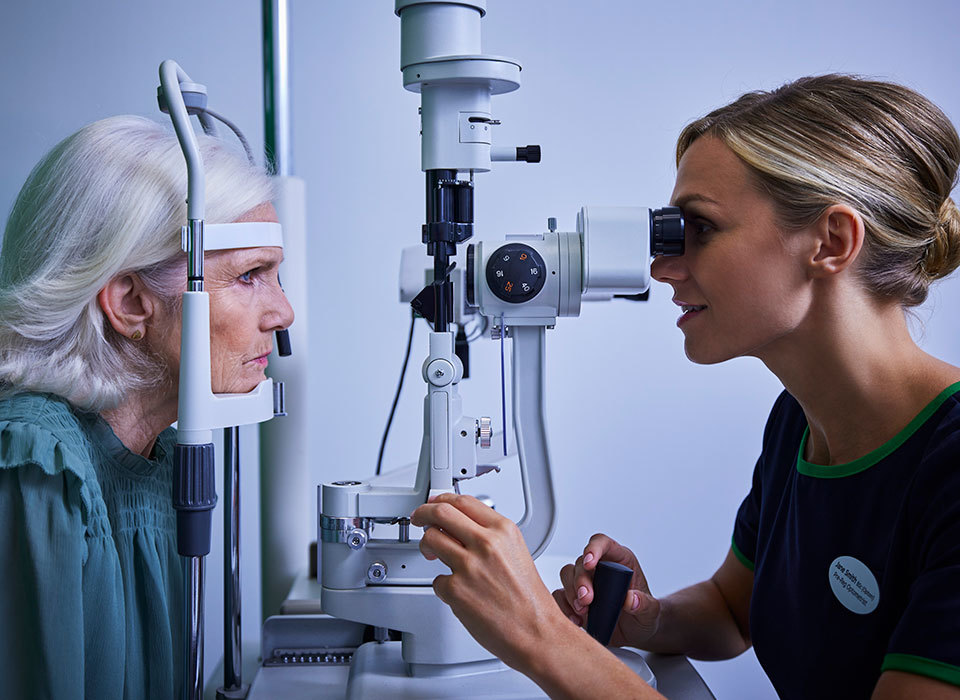
Specsavers UK and Ireland optics managing director Carina Hummel explains why shifting more eye and hearing care into local communities could ease pressure on the NHS, strengthen high streets and open up new career paths for young people.
Sight and hearing loss already carries an annual economic cost of £106bn in the UK, according to Specsavers research, and that figure is forecast to rise by a further £20bn by 2040. Yet Hummel argues that part of the answer is already embedded in towns and cities across the country: community-based care delivered through the high street.
“By shifting eye and hearing care into the community through primary care models, the UK could save almost £16bn in present value terms by 2040 — around £2.91bn a year,” she says.
“The UK does not need a new model of care, only wider access and investment in the one that already exists on the high street.”
The public appears to recognise that role. Specsavers’ research found that 90 per cent of people regard opticians as an essential high street service, while 81 per cent say the same of hearing care providers or audiologists. Making those services more readily available, Hummel says, would make care easier and more convenient to access.
Stores as healthcare hubs — and local businesses
Specsavers stresses that bringing care closer to communities reinforces the role of its store estate. Hummell says: “Our founding mission is to provide access to care and vital services to local communities, and the way we do this is through being on the high street.
Each Specsavers store is individually owned and run, combining a national brand with local entrepreneurship. That model means stores can serve customers while creating jobs and giving local people the chance to run their own businesses.
Prevention starts with routine checks
Expanding access is only one part of the challenge. Specsavers found that half of Britons would not book a test unless something felt wrong, while 47 per cent of that group assume their sight and hearing are fine until symptoms appear.
“There is a wider education piece to be done on the importance of routine checks in detecting and treating conditions sooner,” Hummel shares.
“We must educate people on the importance of treating eye and ear health the same way they would treat other areas of their health.”
Related Story

Closing the skills gap
The workforce needed to deliver that care is under strain. The number of dispensing opticians has fallen since 2020, while NHS audiology waiting lists have tripled since 2019. Hummel says the industry must work collectively to create more routes into the profession, including apprenticeships and graduate schemes.
Her own career illustrates the breadth of those possibilities. Hummel started in a Specsavers store 25 years ago before training as a dispensing optician.
“Young people need to be made aware of the career opportunities that are available to them,” she says. “This needs to start at school so that young people are equipped with the knowledge to make informed decisions about their futures.”
That could mean professionals visiting schools to give talks and careers advice, alongside sustained investment in high streets so they can support a strong pipeline of opportunities for young talent.
The high street as a launchpad
Retail is the UK’s largest private-sector employer and accounts for almost a quarter of youth employment. But the health of high streets is uneven: Specsavers’ research found that 52 per cent of people view their high street positively, while 40 per cent see it as declining or struggling. For Hummel, that disparity risks making career opportunities a postcode lottery.
“We’ve seen first-hand how retail can unlock doors for young people and present them with a variety of options they might not have known existed,” she says.
“People can begin on the shopfloor in a retail-focused role and pivot to optometry or audiology through training if they choose to. If they prefer to stay on the retail side, there is scope for them to work their way up and run their own store.”
Physical stores keep those first steps close to home, but Hummel warns that the opportunity depends on high streets being able to thrive.
Hummel concludes: “Having physical stores on the high street means that opportunities are available to local people who don’t have to travel far to access these experiences.
“However, this is only possible if every high street in the UK is thriving and in a position to welcome the next generation of talent.”